
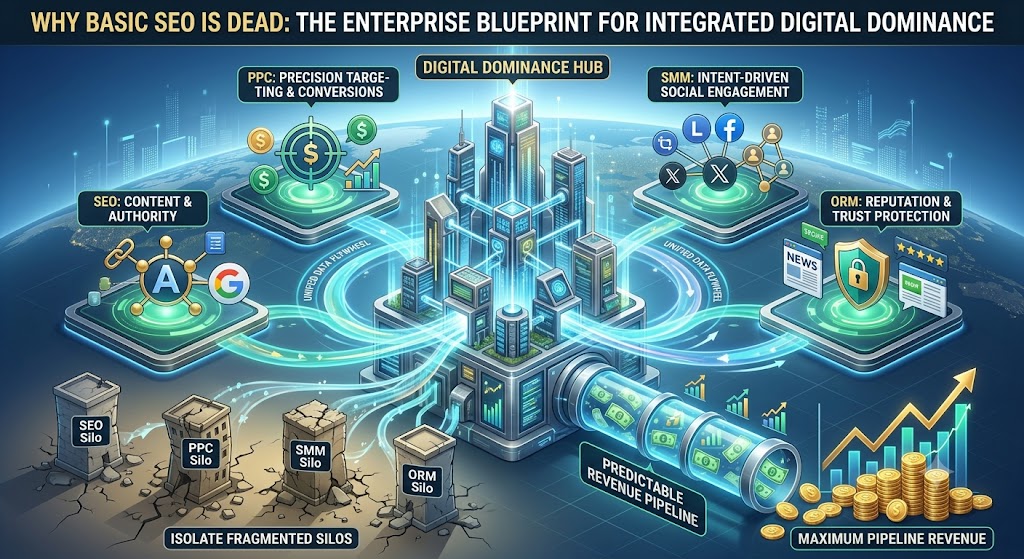
Basic SEO is officially dead. If your agency is still pitching a baseline of meta-tag tweaks, five generic monthly blog posts, and low-tier link building, your marketing budget is actively bleeding out.
In a modern digital landscape flooded with AI-generated fluff, rapid algorithmic shifts, and sky-rocketing ad costs, running isolated marketing tactics is financial suicide. For growing brands and global enterprises, “getting more traffic” is no longer the metric that matters. The true objective is capturing sustained market authority and transforming organic discoverability into a predictable, high-yielding revenue pipeline.
Achieving true brand velocity requires abandoning legacy silos and executing an enterprise-grade framework: Integrated Digital Solutions.

1. The High Cost of Fragmented Marketing Silos
Most corporate organizations still operate their marketing channels like isolated kingdoms:
-
The Organic Search Team works in a total vacuum, chasing keyword volume without knowing which terms actually close deals.
-
The Paid Media Team (PPC) bids aggressively on expensive commercial terms without checking if the brand already owns the #1 organic spot.
-
The Social Media Team produces content focused purely on vanity engagement metrics like likes and shares.
-
The Reputation Management Team (ORM) acts reactively, only stepping in when a PR crisis or severe negative review hits the front page.
This breakdown creates massive inefficiency.
When data stays trapped in channel silos, your brand messaging fractures. You pay multiple times to acquire the exact same user across different touchpoints, without a cohesive narrative to guide them down the conversion funnel. Most importantly, you lose the compounding data multiplier—the explosive performance lift that occurs when channels share real-time insights.
                  ┌─────────────────────────────────────┐
                  │    TRADITIONAL FRAGMENTED MODEL     │
                  └─────────────────────────────────────┘
     [ SEO Silo ]       [ PPC Silo ]       [ SMM Silo ]       [ ORM Silo ]
          │                  │                  │                  │
          ▼                  ▼                  ▼                  ▼
     (Wasted CAC)     (Duplicate Spend)   (Vanity Metrics)   (Reactive Crisis)
True performance acceleration happens when these artificial boundaries are removed, replaced by a single, unified performance matrix managing your complete online presence.
2. The SEO and PPC Data Sync: SERP Monopoly
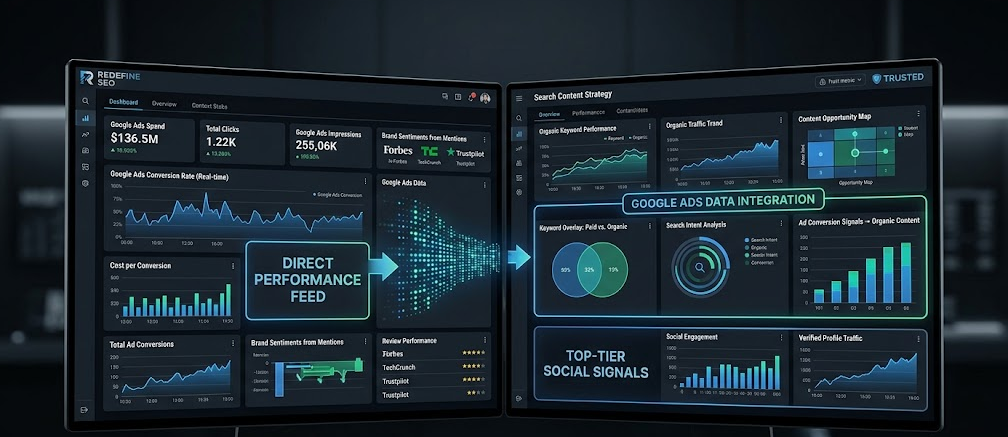
Instead of treating paid search and organic search as internal rivals competing for budget, market leaders integrate them to conquer the Search Engine Results Pages (SERPs).
Accelerated Keyword Intelligence
Building domain authority, producing deep technical content, and acquiring top-tier backlinks takes time. PPC, by contrast, delivers instant feedback.
By running targeted paid campaigns, performance marketers can immediately identify which specific high-intent search queries produce actual revenue—not just empty traffic clicks. Once a keyword proves its commercial conversion power in PPC, that exact data moves straight to the long-term technical SEO pipeline.
Cross-Channel Cost Optimization
Once technical SEO secures a dominant position in the top organic search packs for a high-value commercial term, your team can adjust PPC bidding logic dynamically:
-
Saturated Dominance: Retain a modest paid presence to capture up to 70% of total above-the-fold SERP real estate.
-
Budget Reallocation: Reduce paid bidding on terms where organic capture is locked, reallocating that budget toward aggressive competitor conquesting or exploring untapped keyword vectors.
3. Brand Velocity Meets Reputation Immunity (SMM + ORM)
Traffic without consumer trust yields zero conversions. Over 90% of buyers examine online reviews, forum threads, and brand mentions before making high-ticket purchasing decisions. Your digital reputation is your primary conversion engine.
[Social Media Architecture] ──(Drives Targeted Traffic)──► [Flawless ORM Matrix]
                                                                  │
                                                        (Secures Conversion)
                                                                  ▼
                                                      [Maximum Pipeline Revenue]

Driving Intent with Social Architectures
Social platforms are no longer just branding awareness boards; they are intent-generation engines. By deploying structured content frameworks across LinkedIn, YouTube, and X, you capture high-intent buyers early, driving qualified referral streams directly into your primary web properties.
Neutralizing Search Threats at the Source
Increased visibility naturally brings increased exposure. A single unaddressed negative review, unfair competitor thread, or crisis article can freeze a enterprise sales pipeline overnight.
Integrating a proactive ORM layer into your growth architecture protects your digital identity:
-
Threat Detection: Continuous real-time monitoring catches sentiment shifts before they index on primary search pages.
-
Asset Fortification: Strategic creation of brand-owned digital assets (microsites, executive profiles, strategic press releases) fills page-one search results with positive, authoritative assets.
-
Conversion Validation: When a lead driven by social channels searches your brand name to verify credibility, they find a clean reputation footprint that reinforces their decision to buy.
4. Bulletproofing Digital Assets Against Algorithmic Volatility
For businesses dependent on search visibility, major search engine algorithm updates can feel like an existential threat. A single core update can tank traffic overnight, halting lead generation.
Search penalties usually target sites relying on low-grade shortcuts, thin AI content, or spammy link networks.
Enterprise Core Recovery & Protection Protocol
Protecting your web assets—or recovering from a traffic drop—requires an engineering approach to compliance and content quality.
1. Systematic Link Profile Isolation Audit your backlink profile completely. Disavow toxic, manipulative, or automated links that damage your domain rating. Replace low-tier links with authentic publisher placements and high-authority contextual media.
2. Semantic Content Refactoring Move away from keyword stuffing and thin blog articles. Refactor content into deep, authoritative content hubs built explicitly around clear user intent, structural topical authority, and technical accuracy.
3. Technical Architecture Alignment Eliminate crawl bottlenecks, Javascript rendering errors, bad redirects, and broken schema markup. Ensure search engine bots can easily crawl, index, and evaluate your site’s quality signals.
5. The Architecture of Scale: Deployment Framework
Scaling enterprise visibility across aggressive sectors requires a structured, tiered blueprint tailored to your commercial priorities and target market density.
Elevating Your Brand: The Path to Digital Dominance
The modern digital marketplace does not reward generic efforts. Marketing agencies hiding behind vague engagement metrics, opaque pricing, and templated execution will cause you to lag behind agile competitors.
Sustained market leadership requires:
-
Complete elimination of channel silos.
-
Deep technical execution across all digital touchpoints.
-
An integrated approach linking SEO, PPC, Social, and Reputation Management into a single growth engine.
Move away from piecemeal marketing packages that treat your company as a standardized checklist item. Partner with digital performance architects capable of dissecting complex cross-channel data, engineering robust assets, and building high-performance growth models.
It is time to elevate your brand velocity, lock down dominant search market share, and build a scalable digital revenue asset.







Add comment